Learning isn't bound to a single school, or even a fixed schedule. These days, families are looking into alternative methods of schooling, some of which are mobile - built around different countries, cultures, and direct experience.
This approach naturally makes UK parents ask: how can learning stay structured and effective outside a standard school setting?
To understand, you must know how the model actually functions, how it compares to the systems we know, and what the daily reality looks like for families choosing this path.
Worldschooling is the structured version of learning on the go, where children travel with a guide, getting practical lessons and real-world experiences.
The learning is still structured - lessons, activities, and experiences are planned around travel, instead of a fixed classroom.
This results in education being shaped by dynamic views about various topics, with study continuing alongside changing environments.
Real world locations, such as tours and everyday situations, are used to teach. These experiences explicitly incorporate subjects like maths, history, geography, and languages.
Just touring an area isn’t the point, though.
The activities only become educational when they are guided, reflected on, and linked back to structured learning - building a long term plan similar to that of working in a classroom.
In the UK, worldschooling is still considered a part of basic home education. There is no government-approved programme or a set curriculum. While the British Council talks about inclusive global education, its actual plan is about pushing formal TNE exports and school internationalization instead of backing worldschooling or travel-learning.
The parents will be responsible for providing a suitable education. As a result, most worldschooling is family-led. Structured, bookable programmes are rare.
One of the few established UK examples is Worldschooling.co.uk. Its programmes use tutors from universities such as Oxford and Cambridge, with background-checked staff, 24/7 supervision, and a 50-point vetting process for selecting partners and programmes. There aren’t many similar options.
Most alternatives in the UK are slightly different, like private tutors, summer camps, or custom travel-based learning

Alongside worldschooling, all those approaches operate outside regular schooling. Every one of the three has different structures for various levels of controls, as well as how the learning works in daily life.
The differences are mostly in general experiences - besides homeschooling, everything else is still niche in the UK.
Worldschooling is growing in the UK, thanks to short holiday programmes giving families a way to test subjects before long-term school choices. Having strong GCSEs and A-levels is still important, but sometimes they are not enough to show a student's interest in pursuing a subject beyond the classroom.
A lot of parents use these programmes because they show how a subject feels in real life, not just how it looks in school. That can make it clearer quite quickly whether a student is actually interested in it.
The numbers below (according to OECD) enforce this even further:
- Young adults in England with a university-educated parent are far more likely to reach the same level (76% vs 37% without that background).
- Those without upper secondary education earn around 43% less on average and experience lower employment rates.
So there is a huge potential in worldschooling. These experiences usually work alongside school rather than replacing it, often during summer or half-term breaks.
For many families, it’s just a way to make future choices a bit easier.

After the pandemic, education choices changed across the UK and similar countries. More families now use a mix of options instead of only traditional school.
- Homeschooling Growth: Doubled in 2020 and remained ~51% above pre-pandemic levels by 2024, reaching ~3.7M students (6.73% of K–12) and growing ~5.4% annually.
- Public School Enrollment: Declined ~4% over six years as students shifted to homeschooling, private, and alternative models.
- Private School Enrollment: Grew for four consecutive years through 2024–25, with ~40% of schools reporting increases.
- Parent Preferences: ~59% of parents changed education preferences, with 51% shifting to child-led learning.
Jasper Cawley spent four years worldschooling with his family before returning to high school in Wigan for his final year.
His weeks became structured. He attended classes most of the day. He followed a fixed schedule. He completed assignments and prepared for tests. Some classes were hands-on. Most of them followed a set routine.
He described the experience as repetitive and less engaging than his earlier learning. School helped him get the diploma he wanted. It did not change how he learns or thinks.
From his parents’ view, the year gave him a formal credential. Most of his independence, adaptability, and problem-solving skills came from worldschooling.
A structured worldschooling programme is a planned residential course that combines travel with supervised academic study.
Programmes run on a fixed timetable:
- Mornings: small-group lessons
- Afternoons: activities linked to the subject
- Daily work: short tasks that connect lessons with activities
The China’s Golden Trio programme starts in Beijing - students tour the Forbidden City and the Great Wall, learning about the Ming and Qing dynasties.
As they go, “Culture in context” is practiced as a part of the experience, with street food areas and old hutong streets used as learning spaces.
Next is Xi’an, where the focus is ancient China. The Terracotta Warriors and the old Ming city wall help show this period clearly.
The trip ends in Shanghai. Here, the attention turns to change in the 1900s, comparing colonial buildings on the Bund with the modern skyline in Pudong.
Reflection tasks and group discussions led by students are the highlights of each day. By the end, the purpose of the trip is fulfilled, as students get a clearer sense of how China has changed over time.

The proper fit for worldschooling is based on five considerations: structured learning, staying on track, adapting to travel, group participation, and consistent academic progress.
The quickest way to see how your teenager would react to learning in changing places is to try a short, structured programme.
Before you do that, ask yourself the following questions.
Does the worldschooling learning style suit your teenager?
To know the answer, you’ll have to see how your teenager reacts to how learning is organised.
They might ask questions during activities and learn by doing. Others prefer a stable classroom with clear subject periods.
In structured worldschooling programmes, the week is planned ahead. Lessons usually happen at the start of the week.
The core of this education style is that the theory happens first, and then the rest of the time is filled with activities, trips, and short presentations. The routine repeats each week, moving between classroom learning and real-world settings.
Your teenager may stay engaged with this pattern or find it harder to focus when the environment changes often.
Can your teenager stay on track in a worldschooling structure?
Worldschooling still has structure, but it doesn’t look like a normal school day. There are lessons, set tasks, and a timetable. However, the location can change throughout the day
What matters most is consistency in how the student follows the programme. They are expected to do what the teacher sets, complete their work, and pay attention to what they are doing.
Since the day is planned in advance in structured programmes, the overall routine stays in place, even if the learning environment changes.
Travel in worldschooling changes their daily routine, their learning space, and the people around them.
Some teenagers adjust without much difficulty. They follow the new routine and continue their work in different places.
Another child could need more time when their routine changes, and their focus can be affected - you would need to take mental health factors into account as well.
Looking at this over a short programme can make it clearer whether travel fits the teenager or whether they need more stability.
In most worldschooling programmes, students learn in small groups that share lessons, trips, and activities throughout the week.
The structure includes group discussions, guided visits, and short presentations alongside lessons.
Your teenager won’t be staying with the same classmates for very long. They may be comfortable with changing groups, or need more time to participate fully when the environment shifts.
All lessons and activities use the same academic material in real situations
In most structured worldschooling programmes, your teenager’s learning is organised week by week, taking previous studies into account.
These might involve trips, workshops, or applied tasks, with short written work or presentations used to check understanding.
Progress depends on consistency across the week. If your teenager only completes part of the programme, the link between learning and application can weaken, which affects how well they keep up when topics change.
To help your child have a smooth tour, make sure to follow those basics:
- Check on your teenager’s age, level, readiness, and how they handle travelling alone.
- Pick a programme block with set dates and places. It can include on-campus learning, like language classes, and off-campus learning, like trips and sports.
- Match activities to clear goals to learn between skills, subjects, or projects.
- Check legal needs. Make sure to provide parent permission, safety rules, visas, medical consent, waivers, and travel insurance.
- Sort travel and where they will stay. Set how much supervision they need. Leave them with emergency contacts and safety steps.
- Fill in sign-up forms, health details, and any study or placement checks.
- Your teenager will then join the programme and attend classes and trips as planned.
Once it starts, you can get regular updates on attendance, progress, and tutor notes. Through everything, make sure to take all the factors of your child’s well-being and current home life into account.
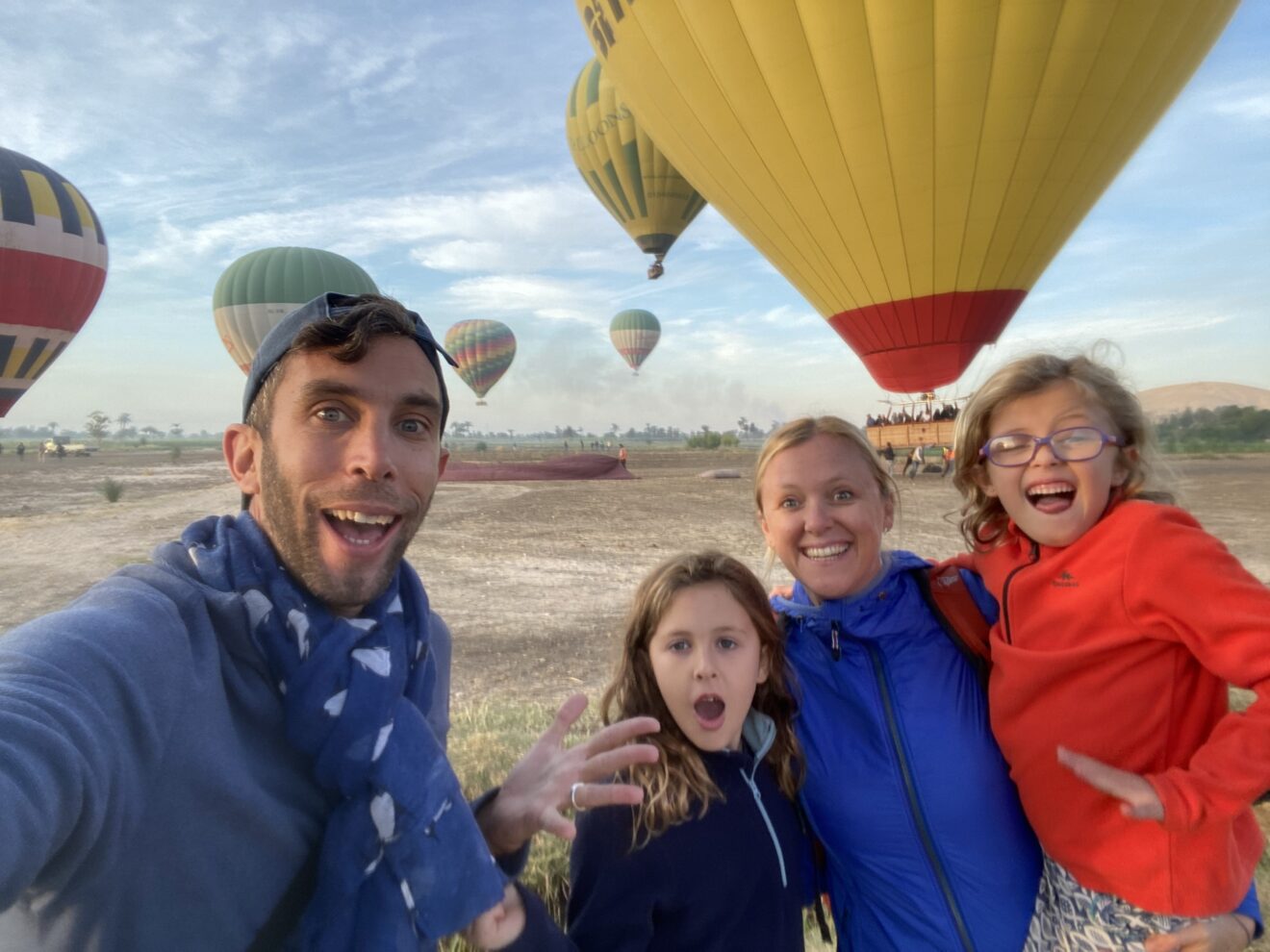
Start with a weekly plan for learning.
Not a full timetable, a simple outline that says what subjects happen and when they happen will do.
Maths, reading, writing, and basic science. Keep these as fixed points in the week. Some families do short daily sessions. Others set two or three longer blocks across the week.
The structure should be easy to repeat without rethinking it each week.
If you are in the UK under home education, there is still an expectation that education is continuous and planned in some form. A weekly structure is what shows that continuity in practice, especially when travel starts and routines change.
Do not merge study time with travel time at the beginning. Keep them separate so learning does not dissolve into activities.
A museum visit, for example, is only useful as learning if it links back to something already being studied, like writing or history. A market visit can support maths if it is used for prices, counting, or comparison, not just observation.
Some families document this in detail. Others keep brief notes. Either works, as long as it is consistent over time.
Start with one stable weekly pattern. And then, build everything else on that.
You need to consider this before you go ahead with any long term travel plans.
For all the nearby countries, the main differences don’t affect education systems. They affect ease of movement, accommodation, and being able top school without interruption.

As a UK citizen, this rule is an important factor for worldschooling. Learning is split into short stays because of this.
Tutors, clubs, and courses are usually temporary
Moves are set by the 90-day rule, not just learning or travel plans. The Schengen rule lets UK citizens stay up to 90 days in any 180 across all Schengen countries (the timing is counted in a combined manner).
When dealing with it, keep in mind:
- Time spent in one Schengen country reduces time available in others
- Staying longer than 90 days without residency is not allowed
- You must leave the Schengen area once the limit is reached, then wait for days to reset before returning
Another important difference is how much paperwork each place expects.
England is the easiest; you only need to deregister and go.
Scotland, Wales, and Northern Ireland will need more checks or proof of learning. And in Europe, the Netherlands and France are more formal with rules and possible registration, while Spain is looser but varies by region.
Overall, there are different levels of admin depending on where you base yourself or travel through.
Here are some answers to some of the most common inquiries parents have regarding worldschooling.
Email the headteacher saying you are home educating and want your child removed from the school roll. Notify them about the last day of attendance. The school will remove the child once they receive the request and tells the local authority. No approval is needed from the local authority for mainstream schools in England, Wales, or Northern Ireland.
The local authority may contact you to ask what education looks like at home or during travel. They cannot enter your home or set a curriculum. They may ask for notes, plans, or samples of work. Under home education, their focus is whether education is suitable, not where it happens.
Yes. Children can enter as private candidates. Registration is done through exam centres that accept external students, usually listed by boards such as AQA and Edexcel. Many families use iGCSEs since they are based on final exams rather than coursework.
No. There is no legal requirement to take GCSEs or A-levels. Exams are optional and only needed if formal qualifications are required later.
It depends on how much contact they have with other children during travel. Some rely on meetups, online groups, or short-term school stays. When returning, schools may need time to place the child and arrange exams if needed.
Single parents sometimes travel with other families or join informal groups for support. For additional needs, therapies are continued where possible and records are kept. Under home education regulations, parents will remain responsible for education, while local authority support may apply in some cases.
In Schengen countries, stays go up to 90 days in any 180-day period. Longer stays will need visas or residency options depending on the country. Keep in mind, rules outside Europe will vary.
Most connect through online groups and informal meetups in popular locations. There is no central system, so families organise around place and timing rather than formal programmes.
Article by: Xinyou Zhang, Founder of Worldschooling
Enter your details to download the full program guide.
Enter your details to receive updates on upcoming programs and destinations.